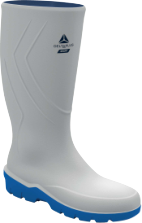
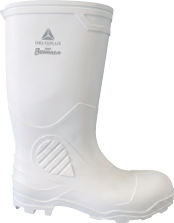
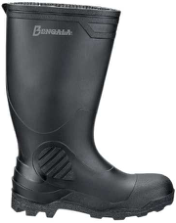
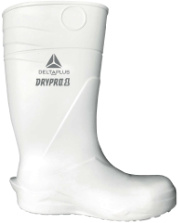
Sicherheitsschuhe
Ob Profi oder Privatperson, schützen Sie sich mit unseren Sicherheitsschuhen vor herabfallenden Werkzeugen oder Materialien. Qualität und Zuverlässigkeit garantiert mit Delta Plus


Ob Profi oder Privatperson, schützen Sie sich mit unseren Sicherheitsschuhen vor herabfallenden Werkzeugen oder Materialien. Qualität und Zuverlässigkeit garantiert mit Delta Plus

The first question that might cross your mind could be: "Why do I need to wear safety shoes?" Well, the answer is relatively straightforward, but its significance is vast. Safety footwear, such as work boots or steel-toe shoes, plays an integral part in ensuring a safer and more secure working environment. They are designed to protect your feet from hazards that can cause severe injury or impairment.
The importance of wearing safety shoes is highlighted in various workplace scenarios where the risks of puncture wounds, slip incidents, or falling objects are high. These scenarios can occur in a wide range of industries, including construction, manufacturing, and even in some retail environments.
The key feature of safety footwear, whether it's a steel-toe work boot or any other type, is the reinforcement in the toe region. This reinforced toe (steel-toe or composite toe) acts as a shield for your toes, absorbing the impact from any falling object, and preventing the force from causing direct harm. Furthermore, the sturdy material of the shoe provides resistance against punctures, a critical safety measure for workers who step on sharp objects unknowingly.
The value of safety footwear goes beyond just protection. Comfort is a vital factor that should not be overlooked. An uncomfortable work boot could lead to distraction, reduced productivity, or even additional health hazards. Therefore, manufacturers like Delta Plus have revolutionized the safety shoes market by creating footwear with insoles designed for comfort, ensuring that they can be worn throughout the working day without causing unnecessary discomfort.
Slip-resistant safety footwear is another game-changer in industries where the work environment might be wet, oily, or otherwise slippery. These shoes are crafted with a special outsole that provides a better grip, reducing the risk of slip and fall incidents significantly.
Wearing safety footwear isn't just about adherence to safety regulations; it's about preserving your health and well-being. A pair of waterproof, insulated, lace-up, steel-toe boots might seem like an optional accessory until a workplace hazard occurs. Protecting your feet with the right safety footwear can make all the difference when it comes to maintaining your comfort and safety at work.
Remember, every toe saved, every slip prevented, every puncture resisted, contributes to a safer working environment. Your choice of safety footwear might just be the barrier between you and potential workplace hazards.

Among the wide range of personal protective equipment available, safety shoes stand out for their variety and their ability to adapt to different working conditions. They are designed to meet a wide range of workplace situations and professional requirements. So, what are the main categories of safety shoes?
In general, there are two main types of safety shoes: high-cut safety shoes and low-cut safety shoes. Each category has its own distinctive features and offers specific advantages in terms of protection, comfort and mobility. Let us take a closer look at these two types of safety shoes in order to better understand their respective uses and help identify the best choice according to the working environment and the risks involved.
Delta Plus high-cut safety shoes are designed to provide increased protection for the ankle and lower leg. They are recommended for environments where there is a risk of injury from falling heavy objects, or where the ankles may be twisted during sudden movements.
In addition, these shoes are generally equipped with thick soles and puncture-resistant protection, making them ideal for uneven ground or areas where sharp debris may be present. They are often chosen by construction workers, materials handlers and people working in the forestry industry.
Low-cut safety shoes, on the other hand, offer greater freedom of movement and are generally lighter. They are suitable for less hazardous working environments or where mobility and comfort are a priority.
Despite their lower profile, they still provide effective protection, with reinforced toe protection and slip-resistant soles. They are often preferred in light industry, logistics and by tradespeople. The choice between high-cut and low-cut safety shoes will therefore depend on the specific needs of each worker.